NAD+ Spray
$119.99
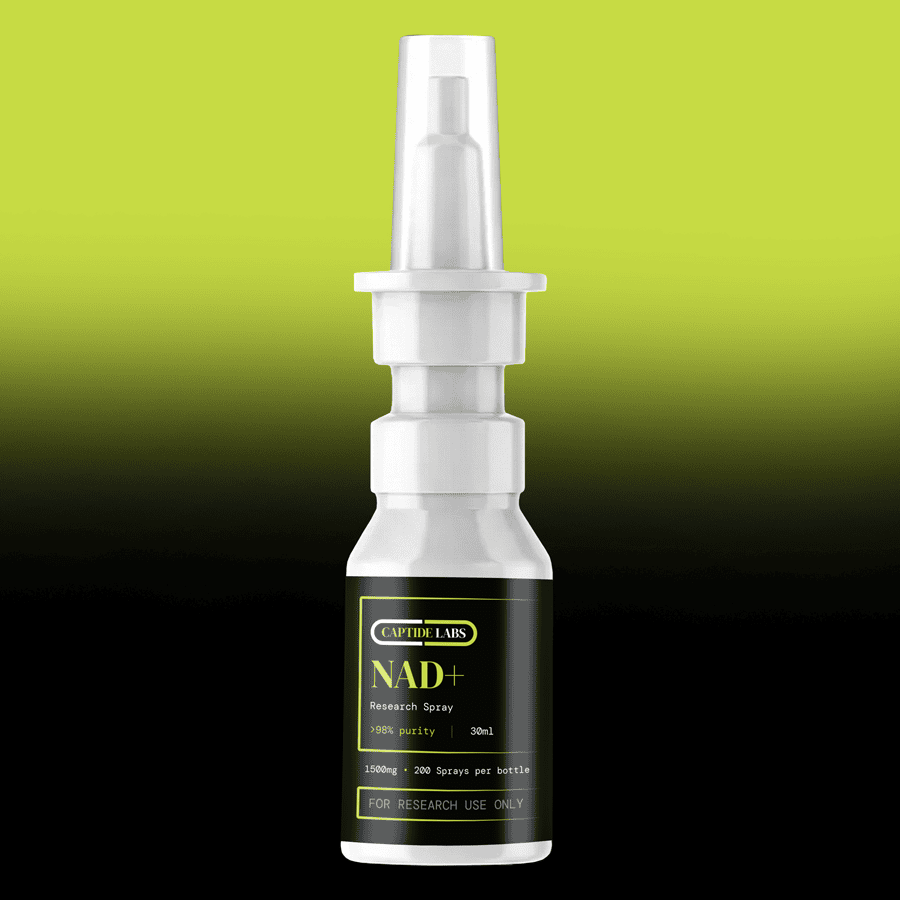
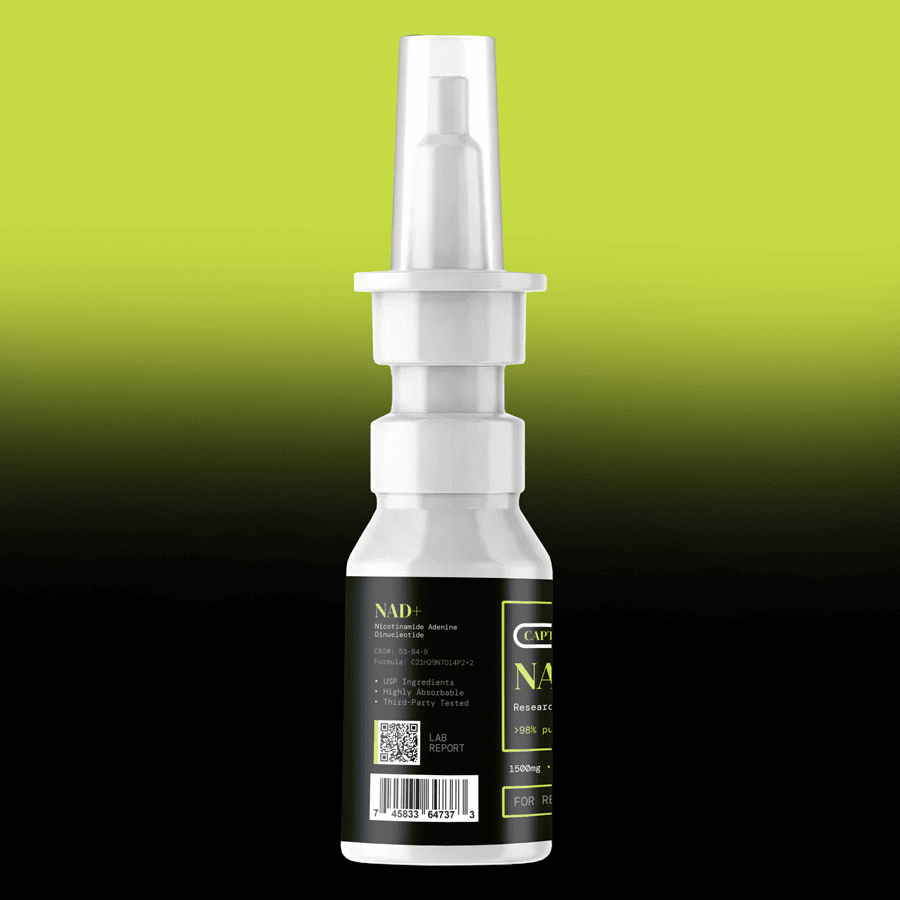
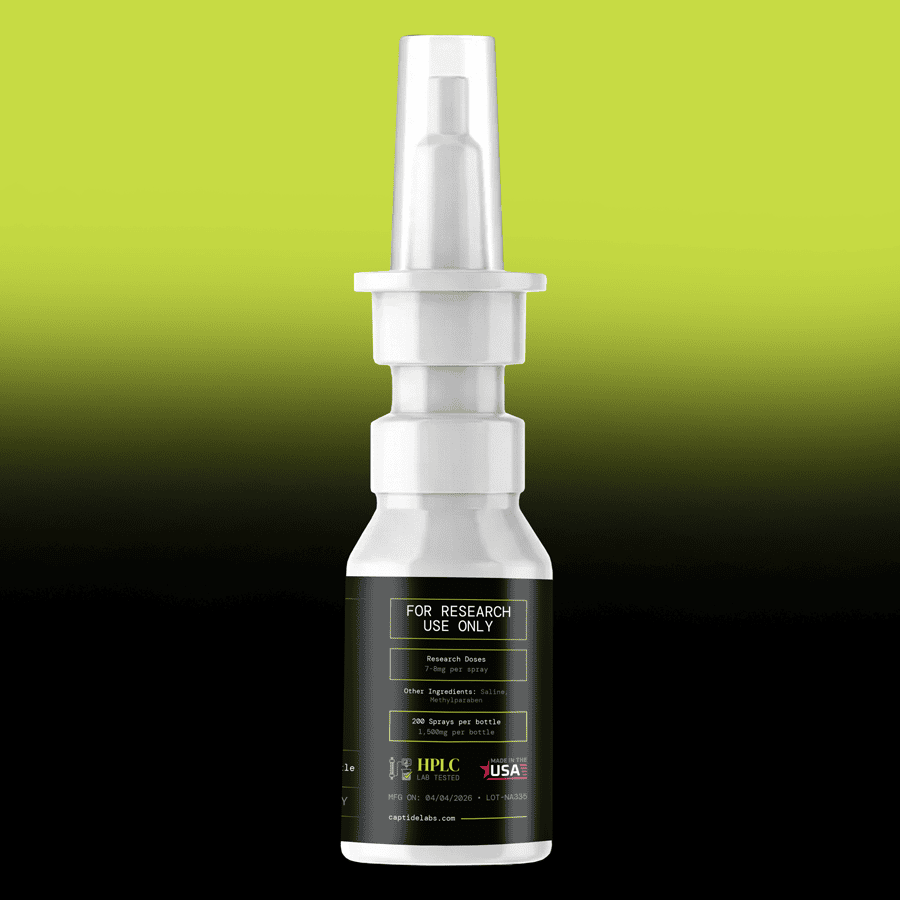
NAD+ research spray — 1500mg per 30ml bottle, 7–8mg per actuation (~200 sprays). Cellular coenzyme for redox, energy metabolism, and sirtuin research. CAS 53-84-9. Third-party tested, ISO 17025 verified. For research use only.

- Description
- FDA Disclosure & Intended Use
- Storage Instructions
- Reviews (0)
- Research Use Only (RUO) Policy
Description
Description
NAD+ Research Spray | Nicotinamide Adenine Dinucleotide & Sirtuin Coenzyme
Captide Labs NAD+ Spray delivers research-grade Nicotinamide Adenine Dinucleotide in a pre-formulated, high-concentration liquid spray format. Each 30ml bottle contains 1500mg of NAD+ at greater than 98% purity, independently verified by HPLC-MS analysis and documented with a full Certificate of Analysis. Each actuation delivers approximately 7–8mg, providing roughly 190–215 sprays per bottle.
NAD+ (CAS 53-84-9, also known as Nadide, Coenzyme I, or DPN+) is a naturally occurring dinucleotide coenzyme found in all living cells. It plays a fundamental role in cellular energy metabolism, redox biology, and DNA repair signaling — serving as the obligate substrate for sirtuin deacetylases (SIRT1–7), PARPs, and CD38, and as the principal electron carrier in mitochondrial oxidative phosphorylation. NAD+ levels decline significantly with age (research indicates up to a 50% reduction by middle age), making NAD+ repletion one of the most actively investigated interventions in longevity, metabolic, and neuroprotective research.
What is NAD+?
Nicotinamide Adenine Dinucleotide (NAD+) is a dinucleotide coenzyme present in all living cells and essential to hundreds of metabolic reactions. It functions as an electron carrier in oxidation-reduction (redox) reactions — cycling between its oxidized form (NAD+) and reduced form (NADH) — making it a central mediator of cellular energy production through glycolysis, the citric acid cycle, and oxidative phosphorylation. The standard midpoint potential of the NAD+/NADH redox pair is −0.32 V, characterizing NADH as a moderately strong reducing agent.
Beyond its role in energy metabolism, NAD+ is a required substrate for several classes of regulatory enzymes including sirtuins (SIRT1–7), PARPs (poly ADP-ribose polymerases), and CD38 — proteins with key roles in DNA repair, gene expression regulation, circadian clock function, and cellular stress responses. Research interest in NAD+ has expanded dramatically in the context of aging biology, where declining NAD+ levels correlate with reduced mitochondrial function, impaired DNA repair, and age-related metabolic dysfunction.
Areas of Active NAD+ Investigation
Sirtuin Activation & Longevity Signaling
Sirtuins are NAD+-dependent deacetylases that regulate gene expression, mitochondrial biogenesis, stress resistance, and cellular aging pathways. SIRT1 and SIRT3 in particular have been extensively studied for their roles in metabolic regulation and longevity signaling. Because sirtuin activity is directly dependent on NAD+ availability, researchers use NAD+ supplementation models to investigate how NAD+ levels influence sirtuin-mediated gene regulation, mitochondrial function, and age-associated cellular decline in controlled experimental systems.
DNA Repair & PARP Signaling
PARP enzymes consume NAD+ as a substrate during DNA strand break repair, using it to synthesize poly(ADP-ribose) chains that signal and recruit repair machinery to damage sites. Under conditions of high DNA damage, PARP hyperactivation can deplete cellular NAD+ pools, impairing energy metabolism and accelerating cell death. Researchers studying DNA repair pathways, genomic stability, and the relationship between oxidative stress and NAD+ depletion use exogenous NAD+ to examine how coenzyme availability modulates PARP activity and repair efficiency.
Mitochondrial Function & Cellular Energy Metabolism
NAD+ is indispensable to mitochondrial oxidative phosphorylation — the process by which cells generate the majority of their ATP. As an electron carrier in the electron transport chain, NADH donates electrons to Complex I, driving proton gradient formation and ATP synthesis. Research in aging models has consistently demonstrated that NAD+ decline correlates with reduced mitochondrial membrane potential, decreased ATP production, and impaired mitochondrial biogenesis. These findings have made NAD+ repletion a key area of investigation in metabolic disease and aging research.
Neuroprotection & Cognitive Research
The brain is among the most metabolically demanding tissues in the body and is particularly sensitive to NAD+ depletion. Preclinical studies have investigated NAD+ in models of neurodegeneration, traumatic brain injury, and ischemia, with findings suggesting neuroprotective effects mediated through SIRT1 activation, PARP regulation, and mitochondrial preservation. Intranasal delivery of NAD+ has attracted research interest as a route for bypassing first-pass metabolism and providing direct vascular delivery for systemic and CNS-targeted research applications.
Circadian Rhythm & Metabolic Regulation
NAD+ levels exhibit circadian oscillation, rising during active periods and declining during rest phases, reflecting its coupling to the cellular clock machinery. SIRT1 and CLOCK/BMAL1 form a feedback loop in which NAD+ availability influences circadian gene expression, and circadian gene activity in turn regulates NAD+ biosynthesis via NAMPT. Researchers studying the intersection of metabolism, aging, and circadian biology use NAD+ as a tool for investigating how coenzyme oscillation influences cellular clock function, metabolic timing, and the long-term consequences of circadian disruption.
NAD+ / NNMT Methylation Pathway Crosstalk
A growing area of research focuses on the interplay between NAD+ pools and the methylation enzyme NNMT, which consumes the NAD+ precursor nicotinamide. Researchers investigating how NNMT inhibition affects NAD+ availability — and conversely how NAD+ supplementation interacts with cellular methyl donor pools — frequently study NAD+ alongside NNMT inhibitors as a tool for characterizing both arms of the nicotinamide metabolic network in metabolic and aging research models.
Frequently Asked Questions
What is NAD+ used for in research?
What is the concentration of this spray?
How does NAD+ differ from NMN and NR?
What is the CAS number for NAD+?
Why use a nasal spray format for NAD+?
How should NAD+ Spray be stored?
For research use only. Not for human consumption, veterinary use, or food/agricultural applications. Not evaluated or approved by the FDA. Not intended to diagnose, treat, cure, or prevent any condition. All purchases are made with the understanding that this compound is strictly for in-vitro research and laboratory use. See the full Research Use Only (RUO) Policy.
FDA Disclosure & Intended Use
FDA Disclosure: The statements on this website and the products sold herein have not been evaluated by the U.S. Food and Drug Administration (FDA). These products are not intended to diagnose, treat, cure, or prevent any disease. Products sold are for Research Use Only and are not for human or animal use.
Intended Purpose: Products sold on this site are intended solely for basic laboratory research, pharmaceutical research, or the development of new tests. They are not intended for diagnostic, therapeutic, or clinical use.
Storage Instructions
Handling and Storage Tips:
- Keep peptides cold and away from light once received.
- For short-term use (days to weeks), refrigeration at 4°C (39°F) is acceptable.
- Lyophilized peptides are typically stable at room temperature for several weeks, making it suitable for moderate-term storage.
- For long-term storage (months to years), it’s best to freeze peptides at -80°C (-112°F). Freezing optimally preserves peptide stability for extended periods.
Reviews (0)
Total reviews
Persons recommended this product
Anonymous
Shopper
check_circle Verified
Shop owner replied
Anonymous
Shopper
check_circle Verified
Shop owner replied
There are no reviews yet.
Be the first to review “ ”
Thanks for your review!
Your feedback helps us improve our service.
Research Use Only (RUO) Policy
"RUO" is an abbreviation for Research Use Only. It is a designation used primarily by the FDA (Food and Drug Administration) for products, often in vitro diagnostic (IVD) components like reagents or instruments, that are in the laboratory research phase of development and are not intended for clinical diagnostic use.
READ MORE