BAM-15 Capsules
$159.99
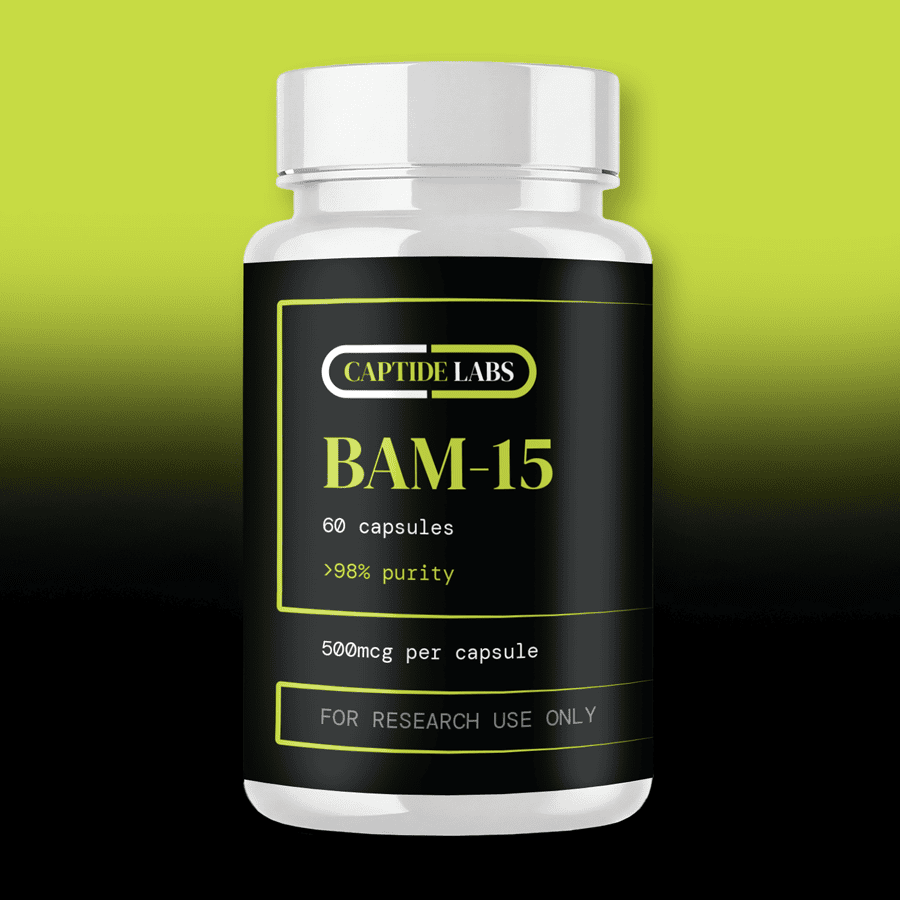
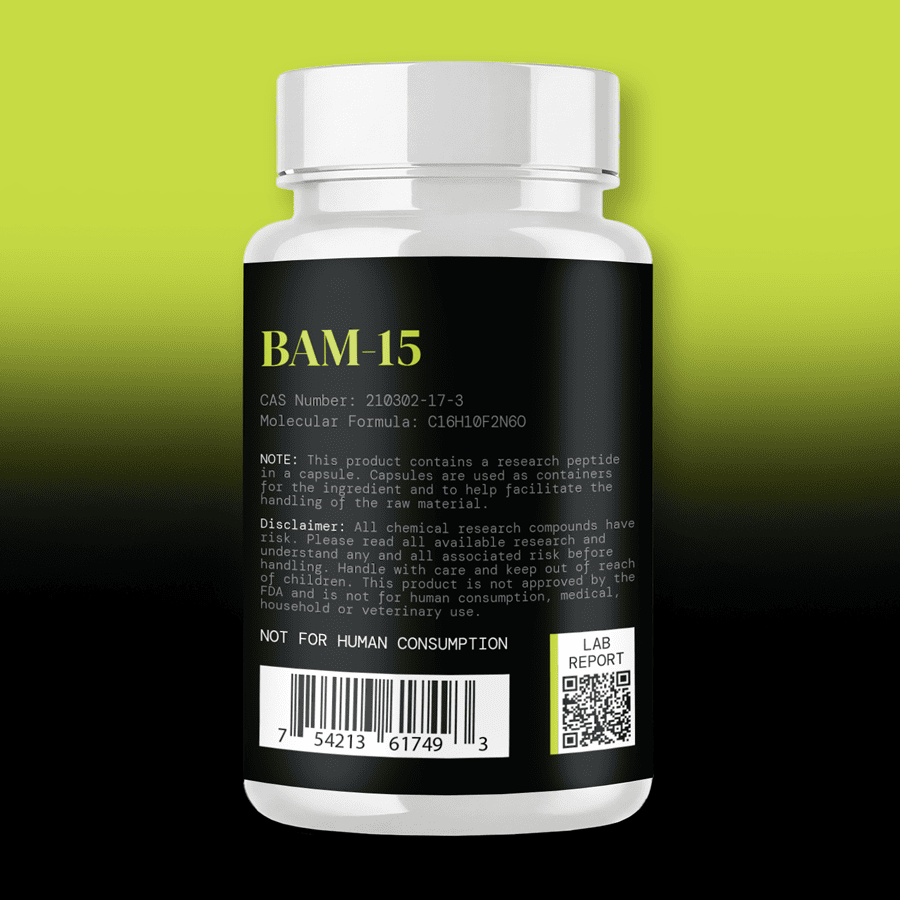
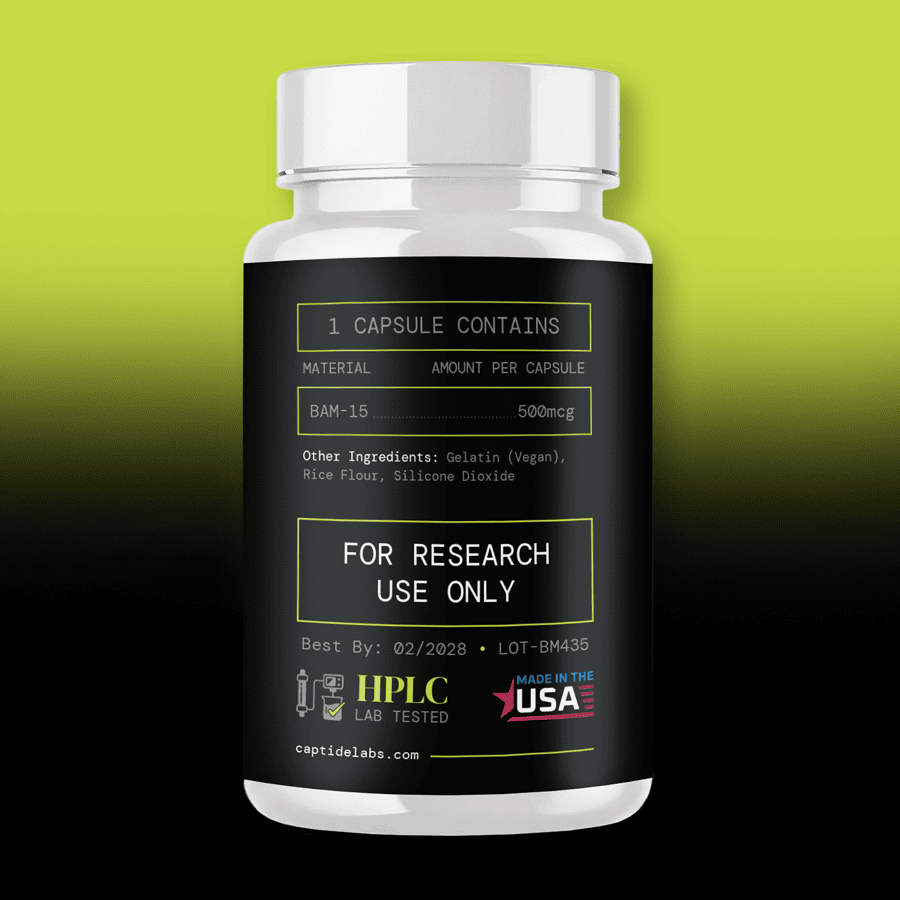
Research-grade BAM-15 capsules. 500mcg per capsule, 60 capsules per bottle. HPLC tested, >98% purity. CAS# 210302-17-3. For research use only.

- Description
- FDA Disclosure & Intended Use
- Storage Instructions
- Reviews (0)
- Research Use Only (RUO) Policy
Description
Description
BAM-15 Research Capsules | Mitochondrial Uncoupler & AMPK Activator
Captide Labs BAM-15 capsules provide researchers with a precisely dosed, encapsulated format of one of the most studied selective mitochondrial uncouplers in contemporary metabolic research. Each capsule delivers 500mcg of BAM-15 at greater than 98% purity, independently verified by HPLC-MS analysis and documented with a full Certificate of Analysis.
BAM-15 (CAS 210302-17-3) is a protonophore that selectively uncouples mitochondrial oxidative phosphorylation without depolarizing the plasma membrane — a key differentiator from older uncoupling agents such as 2,4-dinitrophenol (DNP) and FCCP. It has attracted significant preclinical research interest for its apparent ability to increase energy expenditure and reduce fat mass in animal models without the toxicity profile associated with non-selective uncouplers, and is also classified in the literature as a potent AMPK activator.
What is BAM-15?
BAM-15 is a small-molecule mitochondrial uncoupler that works by transporting protons across the inner mitochondrial membrane, bypassing ATP synthase. This “uncoupling” effect dissipates the proton gradient as heat rather than storing it as ATP — increasing metabolic rate and reducing the efficiency of energy storage without affecting plasma membrane potential.
What makes BAM-15 particularly notable in research is its mitochondria-selective mechanism. Unlike earlier uncouplers such as 2,4-dinitrophenol (DNP) and FCCP, BAM-15 does not collapse the plasma membrane potential at research-relevant concentrations — a property that has made it a preferred tool compound for studying mitochondrial function and metabolic regulation in preclinical settings. It was first characterized by Kenwood et al. (2014) and has since been studied in models of obesity, insulin resistance, NAFLD, ischemia-reperfusion injury, and sepsis.
Areas of Active BAM-15 Investigation
Mitochondrial Uncoupling & Energy Expenditure
BAM-15’s primary mechanism involves proton leak across the inner mitochondrial membrane. In cell culture and animal studies, this has been shown to increase oxygen consumption and whole-body energy expenditure without triggering compensatory hyperthermia — a key safety signal that has distinguished it from earlier uncouplers in preclinical models. Reported EC50 in L6 myoblast mitochondria is approximately 270 nM.
Obesity & Metabolic Disease Models
Diet-induced obesity mouse models have demonstrated significant reductions in fat mass following BAM-15 administration, without loss of lean mass or food intake changes (Alexopoulos et al., Nature Communications 2020). These findings have positioned BAM-15 as a tool compound for studying the metabolic consequences of mitochondrial uncoupling in the context of obesity research.
Insulin Sensitivity & Glucose Metabolism
Preclinical studies have investigated BAM-15’s effects on insulin resistance and glucose uptake. Animal models have shown improved insulin sensitivity and reduced fasting glucose following treatment, independent of weight loss — suggesting direct effects on glucose metabolism pathways via AMPK activation and altered substrate utilization.
Oxidative Stress & ROS Reduction
By reducing mitochondrial membrane potential, BAM-15 has been shown to decrease the production of reactive oxygen species (ROS) in cellular models. Researchers have investigated this property in the context of conditions associated with mitochondrial oxidative stress, including non-alcoholic fatty liver disease (NAFLD) models and ischemia-reperfusion injury research.
Inflammation & NLRP3 Inflammasome
BAM-15 has been studied for its capacity to suppress the NLRP3 inflammasome — a key driver of sterile inflammation implicated in metabolic syndrome, gout, and atherosclerosis. In vitro and animal studies have demonstrated reduced IL-1β secretion and inflammasome activation following BAM-15 treatment.
Ischemia-Reperfusion & Tissue Protection
Original characterization studies demonstrated BAM-15’s capacity to protect mice from acute renal ischemic-reperfusion injury, sparking ongoing investigation into its tissue-protective effects in cardiac, hepatic, and neural ischemia models. Mechanistic hypotheses center on mild uncoupling-induced reductions in mitochondrial ROS production during reperfusion.
Frequently Asked Questions
What is BAM-15 used for in research?
How is BAM-15 different from DNP and FCCP?
What purity is Captide Labs BAM-15?
What is the CAS number for BAM-15?
How does BAM-15 affect AMPK?
How is the purity of Captide Labs BAM-15 verified?
For research use only. Not for human consumption, veterinary use, or food/agricultural applications. Not evaluated or approved by the FDA. Not intended to diagnose, treat, cure, or prevent any condition. All purchases are made with the understanding that this compound is strictly for in-vitro research and laboratory use. See the full Research Use Only (RUO) Policy.
FDA Disclosure & Intended Use
FDA Disclosure: The statements on this website and the products sold herein have not been evaluated by the U.S. Food and Drug Administration (FDA). These products are not intended to diagnose, treat, cure, or prevent any disease. Products sold are for Research Use Only and are not for human or animal use.
Intended Purpose: Products sold on this site are intended solely for basic laboratory research, pharmaceutical research, or the development of new tests. They are not intended for diagnostic, therapeutic, or clinical use.
Storage Instructions
Handling and Storage Tips:
- Keep peptides cold and away from light once received.
- For short-term use (days to weeks), refrigeration at 4°C (39°F) is acceptable.
- Lyophilized peptides are typically stable at room temperature for several weeks, making it suitable for moderate-term storage.
- For long-term storage (months to years), it’s best to freeze peptides at -80°C (-112°F). Freezing optimally preserves peptide stability for extended periods.
Reviews (0)
Total reviews
Persons recommended this product
Anonymous
Shopper
check_circle Verified
Shop owner replied
Anonymous
Shopper
check_circle Verified
Shop owner replied
There are no reviews yet.
Be the first to review “ ”
Thanks for your review!
Your feedback helps us improve our service.
Research Use Only (RUO) Policy
"RUO" is an abbreviation for Research Use Only. It is a designation used primarily by the FDA (Food and Drug Administration) for products, often in vitro diagnostic (IVD) components like reagents or instruments, that are in the laboratory research phase of development and are not intended for clinical diagnostic use.
READ MORE