Captide Labs

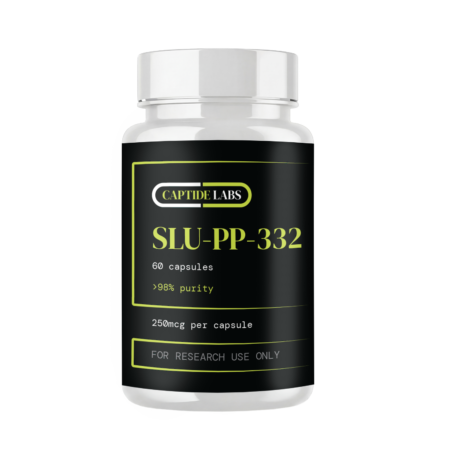
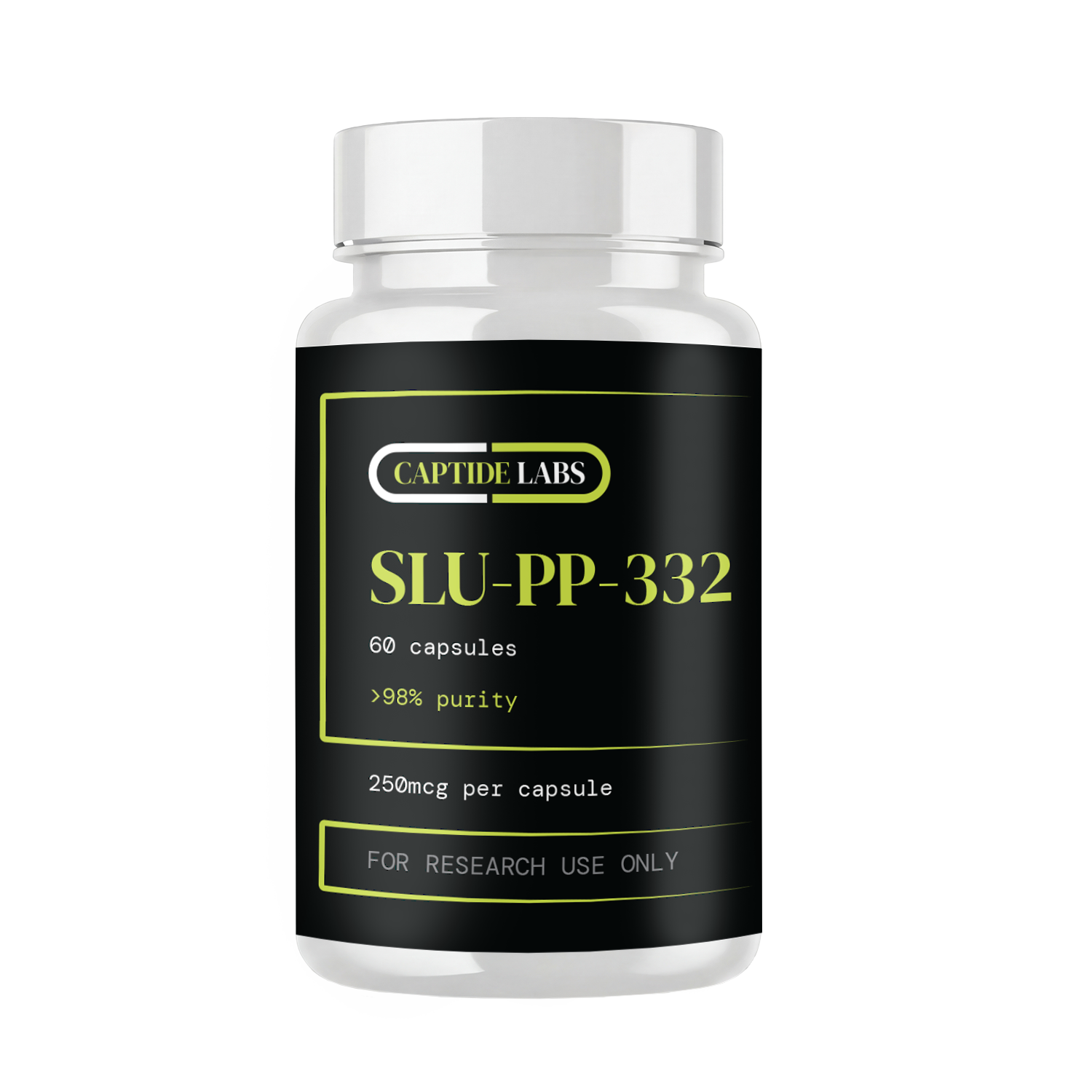
SLU-PP-332 Capsules | 250mcg | 60 Capsules

$109.99

Research-grade SLU-PP-332 capsules. 250mcg per capsule, 60 capsules per bottle. HPLC-MS tested, >98% purity. CAS# 303760-60-3. Pan-ERR agonist. For research use only.

1 BOTTLE
1 Bottle
$109.99/ea
10% OFF
2 BOTTLES
2 Bottles
$98.99/ea
15% OFF
3 BOTTLES
3 Bottles
$93.49/ea

In stock (can be backordered)

Description

ERR Agonist · Research Grade  ·  Performance Collection →

SLU-PP-332 Research Capsules

Captide Labs SLU-PP-332 capsules provide researchers with a precisely dosed, encapsulated format of one of the most discussed exercise-mimetic compounds in contemporary metabolic and exercise biology research. Each capsule delivers 250mcg of SLU-PP-332 at greater than 98% purity, independently verified by HPLC-MS analysis and documented with a full Certificate of Analysis.

SLU-PP-332 (CAS 303760-60-3) is a potent pan-agonist of the estrogen-related receptor (ERR) family — specifically ERRα, ERRβ, and ERRγ. These nuclear receptors are master regulators of mitochondrial biogenesis, oxidative metabolism, and skeletal muscle fiber type composition. By activating all three ERR isoforms simultaneously, SLU-PP-332 has been shown in preclinical models to produce physiological adaptations in skeletal muscle that closely resemble those induced by endurance exercise — earning it significant attention as an exercise-mimetic research compound.

Research Specifications
Compound
SLU-PP-332
CAS Number
303760-60-3
Molecular Formula
C₁₈H₁₄N₂O₂
Purity
>98% (HPLC-MS Verified)
Format
Encapsulated Powder
Amount Per Capsule
250mcg
Capsules Per Bottle
60
Testing Standard
ISO 17025 Accredited Lab
Other Ingredients
Gelatin (Vegan), Rice Flour, Silicon Dioxide

What is SLU-PP-332?

SLU-PP-332 is a synthetic small-molecule pan-agonist developed at Washington University in St. Louis that activates all three isoforms of the estrogen-related receptor (ERR) family — ERRα, ERRβ, and ERRγ. These orphan nuclear receptors function as transcriptional regulators of genes involved in oxidative phosphorylation, fatty acid oxidation, mitochondrial biogenesis, and skeletal muscle fiber type specification.

ERR isoforms are naturally activated by exercise-induced signaling, particularly through PGC-1α coactivation. SLU-PP-332 bypasses the need for upstream exercise signals and directly activates ERR-dependent transcriptional programs — producing gene expression changes in skeletal muscle and other metabolically active tissues that closely resemble those observed following endurance training. This has made it a highly discussed tool compound in exercise biology, metabolic disease, and muscle physiology research.

Research Overview

Areas of active investigation

ERR Pan-Agonism & Transcriptional Regulation
SLU-PP-332’s simultaneous activation of ERRα, ERRβ, and ERRγ produces a broad transcriptional response across metabolic gene networks. Researchers have characterized its effects on ERR target genes including those encoding components of the electron transport chain, TCA cycle enzymes, fatty acid oxidation machinery, and mitochondrial biogenesis regulators such as PGC-1α and TFAM.
Exercise Mimicry & Skeletal Muscle Adaptation
Preclinical studies have demonstrated that SLU-PP-332 drives a shift toward slow-twitch, oxidative muscle fiber types — the same adaptation produced by endurance exercise training. Treated rodents showed increased expression of Type I fiber markers, enhanced mitochondrial density, and improved exercise capacity in treadmill endurance tests. These findings have positioned SLU-PP-332 as a leading tool compound for studying exercise-induced muscle remodeling.
Mitochondrial Biogenesis & Oxidative Metabolism
ERR activation by SLU-PP-332 drives upregulation of mitochondrial biogenesis pathways. Studies have reported increased mitochondrial content, elevated oxygen consumption rates, and enhanced fatty acid oxidation capacity in treated cells and tissues. Researchers have investigated these effects in skeletal muscle, cardiac muscle, and brown adipose tissue — all tissues with high ERR expression and oxidative metabolic activity.
Obesity & Metabolic Disease Models
In diet-induced obesity rodent models, SLU-PP-332 administration has been associated with reduced fat mass, improved insulin sensitivity, and enhanced glucose utilization — effects consistent with increased oxidative metabolic capacity. Researchers have investigated whether ERR-driven metabolic reprogramming can recapitulate the metabolic benefits of exercise in sedentary or metabolically compromised subjects.
Cardiac Function & Heart Failure Models
ERRα and ERRγ are highly expressed in cardiac tissue and are essential for maintaining the oxidative metabolism that powers cardiac contraction. Researchers have investigated SLU-PP-332 in models of heart failure and cardiac metabolic dysfunction, examining whether ERR activation can restore mitochondrial energy production in failing myocardium and improve cardiac function.
Muscle Wasting & Sarcopenia Research
ERR signaling is reduced in aging muscle and in conditions of disuse atrophy. Researchers have investigated SLU-PP-332’s potential to maintain or restore oxidative muscle fiber characteristics in sarcopenia models and in muscle wasting associated with immobilization — providing a pharmacological model for studying exercise-dependent preservation of muscle mass and function.

Related Compound
Explore BAM-15 Research Capsules
Researchers studying mitochondrial metabolism and energy expenditure frequently investigate SLU-PP-332 alongside BAM-15 — a selective mitochondrial uncoupler with complementary mechanisms in oxidative metabolism and fat oxidation research.

Related Compound
Explore 5-Amino-1MQ Research Capsules
Researchers studying NAD⁺ metabolism and mitochondrial function frequently investigate SLU-PP-332 alongside 5-Amino-1MQ — an NNMT inhibitor with complementary mechanisms in cellular energy metabolism and sirtuin activation.

Third-Party Certificate of Analysis
Every batch of SLU-PP-332 capsules is independently tested by an ISO 17025-accredited laboratory. View the full COA including identity confirmation, purity assay, heavy metals, and microbial results.

Frequently Asked Questions

What is SLU-PP-332 used for in research?
+
SLU-PP-332 is used as a tool compound to study estrogen-related receptor (ERR) biology, exercise-induced muscle adaptation, mitochondrial biogenesis, oxidative metabolism, and metabolic disease. It is of particular interest as an exercise-mimetic compound — producing skeletal muscle gene expression changes similar to endurance exercise without physical activity — making it valuable for studying the molecular mechanisms of exercise adaptation.
What are estrogen-related receptors (ERRs)?
+
Estrogen-related receptors (ERRα, ERRβ, ERRγ) are orphan nuclear receptors — transcription factors that share structural similarity with estrogen receptors but are not activated by estrogens. They are master regulators of mitochondrial biogenesis and oxidative metabolism, controlling the expression of hundreds of genes involved in the electron transport chain, fatty acid oxidation, and TCA cycle. They are naturally activated during exercise through PGC-1α coactivation and are essential for maintaining oxidative capacity in heart, skeletal muscle, and brown adipose tissue.
What purity is Captide Labs SLU-PP-332?
+
Each batch of SLU-PP-332 capsules meets a minimum purity of greater than 98% as verified by independent HPLC-MS analysis. A full Certificate of Analysis is available on our Lab Reports page for every production batch, including identity confirmation, assay results, heavy metals screening, and microbial limits.
What is the CAS number for SLU-PP-332?
+
The CAS number for SLU-PP-332 is 303760-60-3. Its molecular formula is C₁₈H₁₄N₂O₂ and its molecular weight is approximately 290.32 g/mol. It was developed at Washington University in St. Louis (SLU) as a pan-ERR agonist and is also referenced in the literature as a 4-hydroxy-N’-(naphthalen-2-ylmethylene)benzohydrazide derivative.
How does SLU-PP-332 compare to GW501516 (Cardarine) as an exercise mimetic?
+
GW501516 (Cardarine) activates PPARδ — a related but distinct nuclear receptor that also regulates fatty acid oxidation and endurance capacity. SLU-PP-332 targets the ERR family instead. Both have been investigated as exercise-mimetic tool compounds, but they activate different transcriptional programs. ERR activation by SLU-PP-332 is more directly tied to PGC-1α coactivation and the canonical exercise-response gene network. Researchers use both compounds to study overlapping but distinct aspects of oxidative metabolism and muscle adaptation.
How should SLU-PP-332 research material be stored?
+
Store SLU-PP-332 capsules in a cool, dry place away from direct light and moisture. As a small-molecule compound it is stable at room temperature for short-term storage. For long-term preservation, refrigeration at 4°C or storage at -20°C in an airtight container is recommended. Protect from heat, humidity, and prolonged UV exposure.

For research use only. Not for human consumption, veterinary use, or food/agricultural applications. Not evaluated or approved by the FDA. Not intended to diagnose, treat, cure, or prevent any condition. All purchases are made with the understanding that this compound is strictly for in-vitro research and laboratory use.

FDA Disclosure: The statements on this website and the products sold herein have not been evaluated by the U.S. Food and Drug Administration (FDA). These products are not intended to diagnose, treat, cure, or prevent any disease. Products sold are for Research Use Only and are not for human or animal use.

Intended Purpose: Products sold on this site are intended solely for basic laboratory research, pharmaceutical research, or the development of new tests. They are not intended for diagnostic, therapeutic, or clinical use.

Handling and Storage Tips:

  • Keep peptides cold and away from light once received.
  • For short-term use (days to weeks), refrigeration at 4°C (39°F) is acceptable.
  • Lyophilized peptides are typically stable at room temperature for several weeks, making it suitable for moderate-term storage.
  • For long-term storage (months to years), it’s best to freeze peptides at -80°C (-112°F). Freezing optimally preserves peptide stability for extended periods.

Reviews

There are no reviews yet.

Be the first to review “SLU-PP-332 Capsules | 250mcg | 60 Capsules”

Your email address will not be published. Required fields are marked *

"RUO" is an abbreviation for Research Use Only. It is a designation used primarily by the FDA (Food and Drug Administration) for products, often in vitro diagnostic (IVD) components like reagents or instruments, that are in the laboratory research phase of development and are not intended for clinical diagnostic use.

READ MORE
Captide Labs SLU-PP-332 capsules — 250mcg pan-ERR agonist research compound
You're viewing: SLU-PP-332 Capsules | 250mcg | 60 Capsules $109.99
Add to cart
PHP Code Snippets Powered By : XYZScripts.com
Select the fields to be shown. Others will be hidden. Drag and drop to rearrange the order.
  • Image
  • SKU
  • Rating
  • Price
  • Stock
  • Availability
  • Add to cart
  • Description
  • Content
  • Weight
  • Dimensions
  • Additional information
Click outside to hide the comparison bar
Compare
✓ Added to cart!