Captide Labs

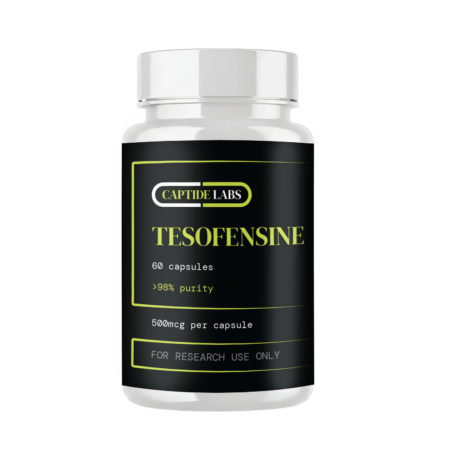
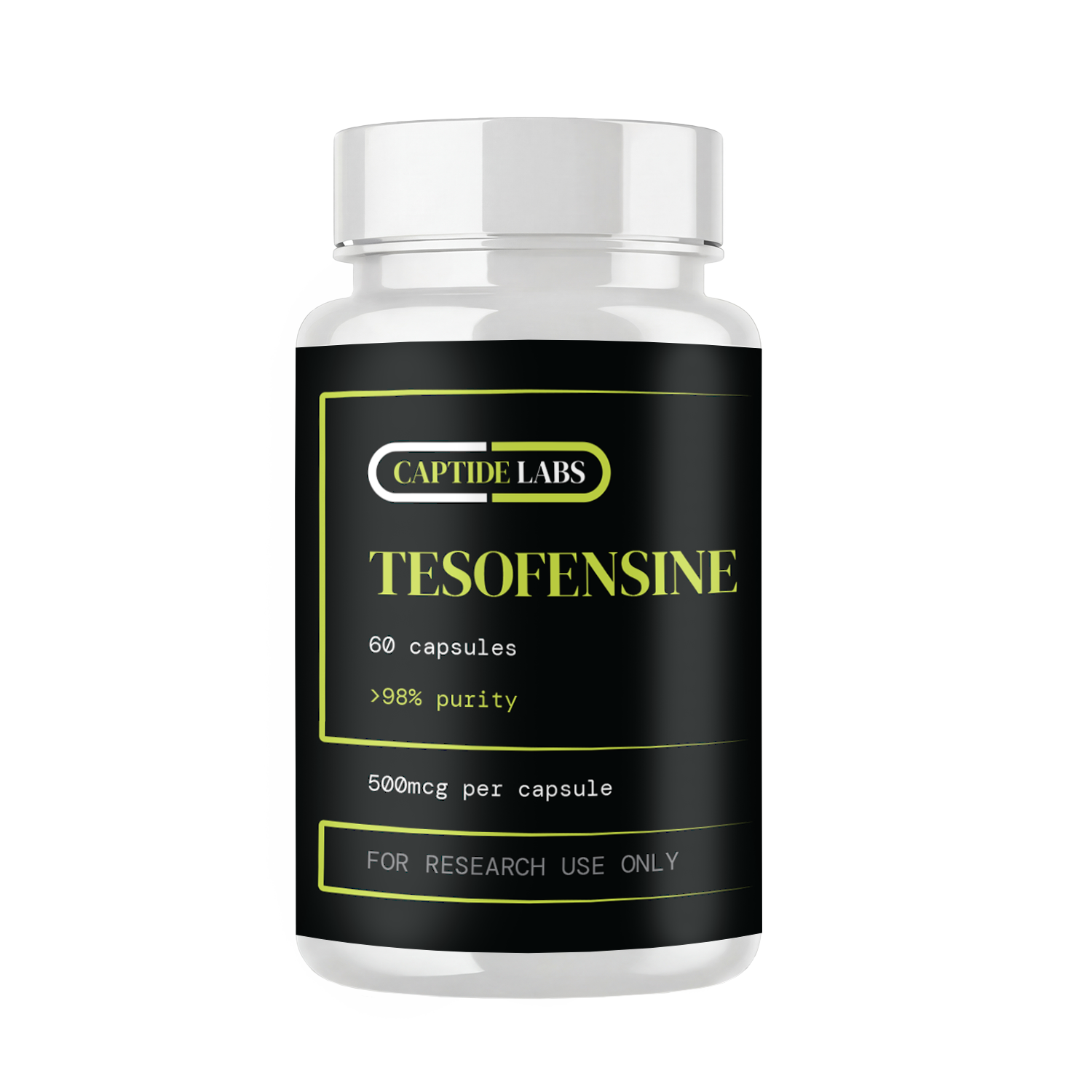
Tesofensine Capsules | 500mcg | 60 Capsules

$170.00

Research-grade Tesofensine capsules. 500mcg per capsule, 60 capsules per bottle. HPLC-MS tested, >98% purity. CAS# 195875-84-4. Triple monoamine reuptake inhibitor. For research use only.

1 BOTTLE
1 Bottle
$170.00/ea
10% OFF
2 BOTTLES
2 Bottles
$153.00/ea
15% OFF
3 BOTTLES
3 Bottles
$144.50/ea

In stock (can be backordered)

Description

Triple Monoamine Reuptake Inhibitor · Research Grade  ·  Metabolic Collection →

Tesofensine Research Capsules

Captide Labs Tesofensine capsules provide researchers with a precisely dosed, encapsulated format of one of the most clinically advanced investigational compounds in the field of obesity and appetite regulation research. Each capsule delivers 500mcg of Tesofensine at greater than 98% purity, independently verified by HPLC-MS analysis and documented with a full Certificate of Analysis.

Tesofensine (CAS 195875-84-4) is a triple monoamine reuptake inhibitor — blocking the reuptake of serotonin, dopamine, and norepinephrine simultaneously. Originally developed as a candidate treatment for Parkinson’s and Alzheimer’s disease, it was subsequently identified as a potent appetite suppressant and has been investigated in Phase 2 and Phase 3 clinical trials for obesity. Its unique triple-reuptake mechanism differentiates it from single or dual reuptake inhibitors and has made it a subject of significant research interest in central nervous system regulation of body weight and appetite.

Research Specifications
Compound
Tesofensine
CAS Number
195875-84-4
Molecular Formula
C₁₇H₂₃ClN₂O
Purity
>98% (HPLC-MS Verified)
Format
Encapsulated Powder
Amount Per Capsule
500mcg
Capsules Per Bottle
60
Testing Standard
ISO 17025 Accredited Lab
Other Ingredients
Gelatin (Vegan), Rice Flour, Silicon Dioxide

What is Tesofensine?

Tesofensine is a pre-synaptic monoamine reuptake inhibitor that simultaneously inhibits the transporters for serotonin (SERT), dopamine (DAT), and norepinephrine (NET). This triple-reuptake mechanism elevates synaptic concentrations of all three monoamines in the central nervous system, producing a coordinated effect on appetite, satiety signaling, and energy expenditure that has been extensively studied in the context of obesity pharmacology.

Originally developed by NeuroSearch (Denmark) for Parkinson’s and Alzheimer’s disease — where monoaminergic deficits play a pathological role — Tesofensine’s potent appetite-suppressing effects were identified during clinical trials. Subsequent Phase 2 trials in obesity demonstrated among the largest weight loss effects observed for any investigational anti-obesity compound at the time, generating significant research interest in its central mechanisms of appetite and reward regulation.

Research Overview

Areas of active investigation

Triple Monoamine Reuptake Inhibition
Tesofensine’s simultaneous inhibition of SERT, DAT, and NET has made it a tool compound for studying the coordinated role of serotonin, dopamine, and norepinephrine in appetite regulation and energy balance. Researchers have used it to investigate how monoaminergic tone in hypothalamic and mesolimbic circuits modulates food intake, hedonic eating behavior, and body weight homeostasis.
Appetite Suppression & Satiety Signaling
Phase 2 clinical trials demonstrated profound reductions in caloric intake and body weight in obese subjects. Preclinical and clinical researchers have investigated the neurochemical mechanisms underlying Tesofensine’s anorectic effects, including its modulation of hypothalamic neuropeptide Y (NPY), POMC, and AgRP signaling — key regulators of hunger and satiety in the arcuate nucleus.
Energy Expenditure & Thermogenesis
Beyond appetite suppression, clinical data suggests Tesofensine increases resting energy expenditure — an effect attributed partly to increased norepinephrine tone and sympathetic nervous system activation. Researchers have investigated its effects on brown adipose tissue thermogenesis, basal metabolic rate, and substrate utilization in both animal models and human trials.
Dopaminergic Reward Pathways & Food Motivation
Tesofensine’s dopamine reuptake inhibition has made it a research tool for studying reward-motivated feeding behavior. Researchers have examined its effects on mesolimbic dopamine signaling, food reward salience, and compulsive eating patterns in animal models — providing insights into the neurobiological overlap between obesity and reward dysregulation.
Neurodegenerative Disease Models
In its original research context, Tesofensine was studied in Parkinson’s disease models for its ability to restore dopaminergic and noradrenergic tone in degenerating neural circuits. Researchers have investigated its neuroprotective potential, its effects on motor function in MPTP-treated animal models, and its ability to modulate cholinergic signaling in Alzheimer’s disease models.
Metabolic Syndrome & Cardiometabolic Risk
Clinical trials have investigated Tesofensine’s effects on cardiometabolic risk factors in obese subjects, including fasting glucose, insulin sensitivity, lipid profiles, and blood pressure. Researchers have examined whether the weight loss produced by Tesofensine translates to improvements in metabolic syndrome parameters independent of caloric restriction.

Related Compound
Explore Orforglipron Research Capsules
Researchers studying central appetite regulation frequently investigate Tesofensine alongside Orforglipron — an oral GLP-1 receptor agonist with complementary peripheral and central mechanisms in appetite suppression and body weight regulation.

Related Compound
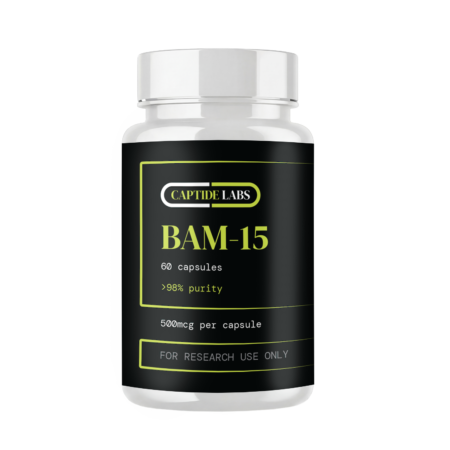
Explore BAM-15 Research Capsules
Researchers studying energy expenditure and metabolic rate frequently investigate Tesofensine alongside BAM-15 — a selective mitochondrial uncoupler with complementary mechanisms in thermogenesis and fat oxidation research.

Third-Party Certificate of Analysis
Every batch of Tesofensine capsules is independently tested by an ISO 17025-accredited laboratory. View the full COA including identity confirmation, purity assay, heavy metals, and microbial results.

Frequently Asked Questions

What is Tesofensine used for in research?
+
Tesofensine is used in research to study the central nervous system regulation of appetite and body weight, triple monoamine reuptake inhibition, reward-motivated feeding behavior, and energy expenditure. It has also been studied in neurodegenerative disease models where monoaminergic deficits are pathologically relevant, including Parkinson’s and Alzheimer’s disease models.
How does Tesofensine differ from other appetite suppressants?
+
Unlike single or dual reuptake inhibitors, Tesofensine simultaneously inhibits serotonin, dopamine, and norepinephrine transporters. This triple mechanism produces coordinated effects across multiple appetite-regulating circuits — both hypothalamic satiety pathways (serotonin, norepinephrine) and mesolimbic reward circuits (dopamine). This distinguishes it pharmacologically from compounds like sibutramine (dual SNRI) and makes it a unique tool for studying multi-neurotransmitter appetite regulation.
What purity is Captide Labs Tesofensine?
+
Each batch of Tesofensine capsules meets a minimum purity of greater than 98% as verified by independent HPLC-MS analysis. A full Certificate of Analysis is available on our Lab Reports page for every production batch, including identity confirmation, assay results, heavy metals screening, and microbial limits.
What is the CAS number for Tesofensine?
+
The CAS number for Tesofensine is 195875-84-4. Its molecular formula is C₁₇H₂₃ClN₂O and its molecular weight is approximately 310.83 g/mol. It is also known by the development code NS2330 and was originally developed by NeuroSearch A/S in Denmark.
What stage of clinical development is Tesofensine at?
+
Tesofensine has completed Phase 2 clinical trials for obesity and has been evaluated in Phase 3 studies. Phase 2 data demonstrated significant body weight reductions over 24 weeks. It has not received regulatory approval and remains an investigational compound. It is supplied by Captide Labs strictly for research use only and is not approved by the FDA for any indication.
How should Tesofensine research material be stored?
+
Store Tesofensine capsules in a cool, dry place away from direct light and moisture. As a small-molecule compound, it is stable at room temperature for short-term storage. For long-term preservation, refrigeration at 4°C or storage at -20°C in an airtight container is recommended. Keep away from heat, humidity, and oxidizing agents.

For research use only. Not for human consumption, veterinary use, or food/agricultural applications. Not evaluated or approved by the FDA. Not intended to diagnose, treat, cure, or prevent any condition. All purchases are made with the understanding that this compound is strictly for in-vitro research and laboratory use.

FDA Disclosure: The statements on this website and the products sold herein have not been evaluated by the U.S. Food and Drug Administration (FDA). These products are not intended to diagnose, treat, cure, or prevent any disease. Products sold are for Research Use Only and are not for human or animal use.

Intended Purpose: Products sold on this site are intended solely for basic laboratory research, pharmaceutical research, or the development of new tests. They are not intended for diagnostic, therapeutic, or clinical use.

Handling and Storage Tips:

  • Keep peptides cold and away from light once received.
  • For short-term use (days to weeks), refrigeration at 4°C (39°F) is acceptable.
  • Lyophilized peptides are typically stable at room temperature for several weeks, making it suitable for moderate-term storage.
  • For long-term storage (months to years), it’s best to freeze peptides at -80°C (-112°F). Freezing optimally preserves peptide stability for extended periods.

Reviews

There are no reviews yet.

Be the first to review “Tesofensine Capsules | 500mcg | 60 Capsules”

Your email address will not be published. Required fields are marked *

"RUO" is an abbreviation for Research Use Only. It is a designation used primarily by the FDA (Food and Drug Administration) for products, often in vitro diagnostic (IVD) components like reagents or instruments, that are in the laboratory research phase of development and are not intended for clinical diagnostic use.

READ MORE
Captide Labs Tesofensine capsules — 500mcg triple monoamine reuptake inhibitor research compound
You're viewing: Tesofensine Capsules | 500mcg | 60 Capsules $170.00
Add to cart
PHP Code Snippets Powered By : XYZScripts.com
Select the fields to be shown. Others will be hidden. Drag and drop to rearrange the order.
  • Image
  • SKU
  • Rating
  • Price
  • Stock
  • Availability
  • Add to cart
  • Description
  • Content
  • Weight
  • Dimensions
  • Additional information
Click outside to hide the comparison bar
Compare
✓ Added to cart!