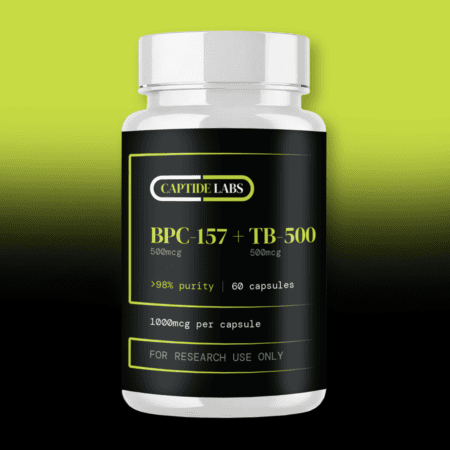
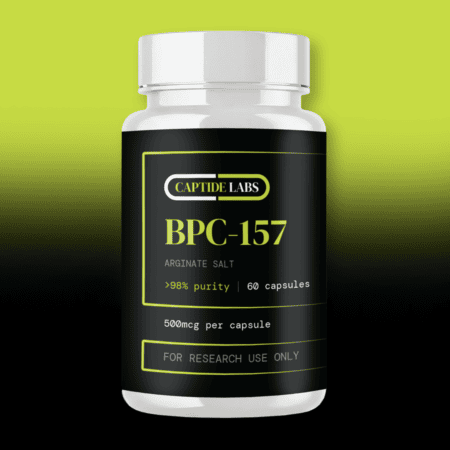
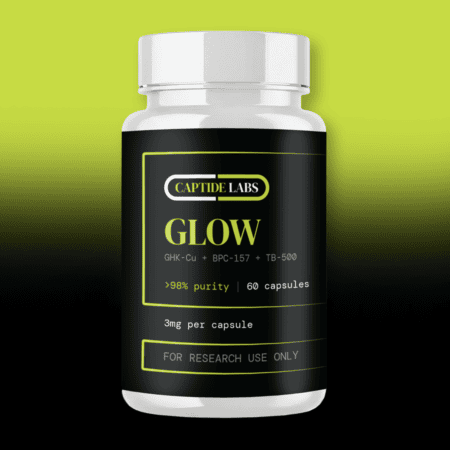
BPC-157 (Body Protection Compound-157), also referred to as the gastric pentadecapeptide BPC 157 or PL 14736, is a synthetic 15-amino-acid peptide corresponding to a partial sequence of body protection compound, a protein originally isolated from human gastric juice. Its amino-acid sequence is Gly-Glu-Pro-Pro-Pro-Gly-Lys-Pro-Ala-Asp-Asp-Ala-Gly-Leu-Val (GEPPPGKPADDAGLV). The compound is catalogued under CAS number 137525-51-0, with a molecular formula of C₆₂H₈₈N₁₆O₂₂ and a molecular weight of approximately 1419.55 g/mol. A defining physicochemical characteristic in the published literature is its stability in aqueous and low-pH environments without the need for a carrier molecule, which distinguishes it from many other peptides studied in tissue-repair models.
BPC-157 has been studied predominantly in rodent models, where investigators have examined its effects on the healing of several connective and soft tissues, including tendon, ligament, muscle, and gastrointestinal mucosa. The compound is supplied here strictly as a research-use chemical for in vitro and laboratory investigation of these mechanistic pathways. BPC-157 is not approved by the FDA, EMA, or any other regulatory authority for any indication, and no adequately powered human clinical trials have established efficacy or a safety profile for the peptide.
Important note on the evidence base: The peer-reviewed BPC-157 literature consists almost entirely of in vitro work and in vivo rodent studies, much of it produced by a small number of research groups. Human data are extremely limited, and no completed Phase 2 or Phase 3 clinical trials have validated the mechanisms described below in human participants. Researchers consulting this page should weight the evidence accordingly and refer to the primary literature in the References section for full methodological detail.
Mechanism of Action
The mechanistic literature on BPC-157 centers on its modulation of angiogenesis, its interaction with the nitric oxide (NO) system, and its effects on fibroblast behavior in connective tissue. The proposed pathways below are drawn from preclinical work and have not been independently confirmed in human clinical studies.
VEGF-mediated angiogenesis
The most extensively documented mechanism is the peptide’s modulation of angiogenesis through vascular endothelial growth factor (VEGF). In a study of muscle and tendon healing in rat models, investigators reported that BPC-157 administration was associated with up-regulated VEGF expression and adequately modulated angiogenesis during the healing process, while noting no direct angiogenic effect on isolated cell cultures — suggesting the angiogenic activity is closely tied to the in vivo healing environment rather than a direct action on endothelial cells in isolation [1].
VEGFR2 and the Akt–eNOS axis
Subsequent mechanistic work using chick chorioallantoic membrane (CAM) and endothelial tube-formation assays reported that BPC-157 increased vessel density both in vivo and in vitro and accelerated recovery of blood flow in ischemic rat hind-limb muscle, with histological analysis showing enhanced vascular expression of VEGF receptor 2 (VEGFR2) [2]. A narrative review of musculoskeletal applications summarizes the peptide as engaging VEGFR2 and nitric oxide synthesis via the Akt–eNOS axis, alongside ERK1/2 signaling, to influence angiogenesis and fibroblast activity, particularly in poorly vascularized tissues such as tendons and myotendinous junctions [3].
Fibroblast outgrowth, migration, and the FAK–paxillin pathway
In an investigation of tendon healing, researchers reported that BPC-157 significantly accelerated the outgrowth of tendon fibroblasts from tendon explants and increased their in vitro migration in a dose-dependent manner, an effect the authors attributed to activation of the FAK–paxillin signaling pathway. Cell proliferation itself was not directly affected, but cell survival under oxidative (H₂O₂) stress was significantly increased [4].
Growth hormone receptor expression
A separate study using cDNA microarray analysis identified the growth hormone receptor as one of the most up-regulated genes in tendon fibroblasts exposed to BPC-157, with the peptide increasing growth hormone receptor expression at both the mRNA and protein levels in a dose- and time-dependent manner. The authors proposed this as one route by which the peptide may sensitize tendon fibroblasts to growth-hormone-driven proliferation in the healing context [5].
None of the mechanisms summarized here have been independently verified in adequately powered human clinical trials of BPC-157 specifically.
Forms and Use in the Research Literature
The amount ranges and routes described below reflect the protocols used in the published preclinical BPC-157 literature. They are reported strictly for research-reference purposes and do not constitute administration recommendations of any kind.
Rodent tissue-healing protocols. The published in vivo work has predominantly used rat models of transected Achilles tendon, transected or crushed muscle, and ligament injury, with BPC-157 administered by intraperitoneal, intramuscular, or local routes over multi-day treatment windows. Endpoints have included functional, biomechanical, macroscopic, and histological measures of healing, alongside immunohistochemical markers of angiogenesis such as VEGF, CD34, and Factor VIII [1].
In vitro characterization. Cell-culture studies have characterized the peptide’s effects on tendon fibroblast outgrowth, migration, survival under oxidative stress, and gene-expression changes, typically across a range of micromolar concentrations [4, 5].
Pharmacokinetic profile. Reported rodent pharmacokinetic data describe a short plasma elimination half-life (on the order of minutes following intravenous and intramuscular administration in rats). Published human pharmacokinetic data for BPC-157 are not available.
Stability and storage. BPC-157 is typically supplied as a lyophilized powder. The peptide is noted in the literature for stability relative to many comparable peptides; as with all research peptides, lyophilized material is generally stored frozen, and reconstituted solutions are kept refrigerated and protected from light. Each lot supplied by Captide Labs is accompanied by a batch-specific Certificate of Analysis documenting identity and purity by HPLC.
Adverse-event profile. No human clinical-trial adverse-event database exists for BPC-157. The available preclinical literature is not equivalent to a regulated Phase 1 safety dataset, and safety in humans has not been established.
References
- Brcic L, Brcic I, Staresinic M, Novinscak T, Sikiric P, Seiwerth S. Modulatory effect of gastric pentadecapeptide BPC 157 on angiogenesis in muscle and tendon healing. J Physiol Pharmacol. 2009;60 Suppl 7:191–196. PubMed: 20388964
- Hsieh MJ, Liu HT, Wang CN, et al. Therapeutic potential of pro-angiogenic BPC157 is associated with VEGFR2 activation and up-regulation. J Mol Med (Berl). 2017;95(3):323–333. doi:10.1007/s00109-016-1488-y
- Vasireddi N, Hahamyan H, Salata MJ, et al. Emerging Use of BPC-157 in Orthopaedic Sports Medicine: A Systematic Review. HSS J. 2025. doi:10.1177/15563316251355551
- Chang CH, Tsai WC, Lin MS, Hsu YH, Pang JS. The promoting effect of pentadecapeptide BPC 157 on tendon healing involves tendon outgrowth, cell survival, and cell migration. J Appl Physiol. 2011;110(3):774–780. doi:10.1152/japplphysiol.00945.2010 · PubMed: 21030672
- Chang CH, Tsai WC, Hsu YH, Pang JS. Pentadecapeptide BPC 157 enhances the growth hormone receptor expression in tendon fibroblasts. Molecules. 2014;19(11):19066–19077. doi:10.3390/molecules191119066