Captide Labs

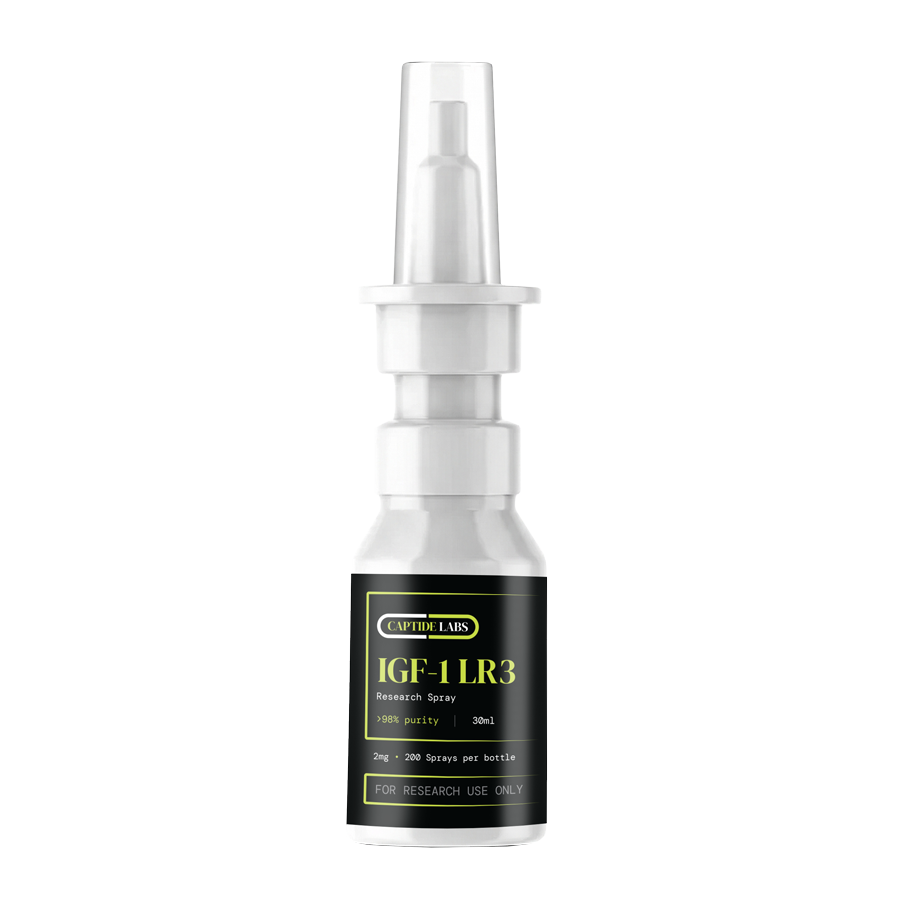
IGF-1 LR3 Spray | 2mg

$149.99

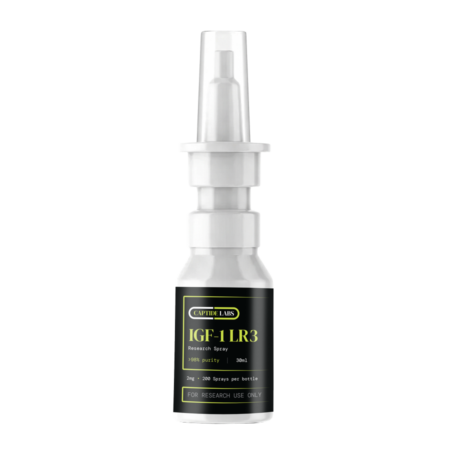
IGF-1 LR3 research spray — 2mg per 30ml bottle, 200–500mcg per actuation. Long Arg3 IGF-1 analogue with extended half-life (~20–30 hrs). CAS 946870-92-4. Third-party tested, ISO 17025 verified. For research use only.

1 BOTTLE
1 Bottle
$149.99/ea
10% OFF
2 BOTTLES
2 Bottles
$134.99/ea
15% OFF
3 BOTTLES
3 Bottles
$127.49/ea

In stock (can be backordered)

Description

Insulin-Like Growth Factor Analogue · Research Grade  ·  Performance →  ·  Metabolic →

IGF-1 LR3 Research Spray

Captide Labs IGF-1 LR3 Spray delivers research-grade Long Arg3 Insulin-like Growth Factor-1 in a pre-formulated, ready-to-use liquid spray format. Each 30ml bottle contains 2mg of IGF-1 LR3 at greater than 98% purity, independently verified by HPLC-MS analysis and documented with a full Certificate of Analysis. Each actuation delivers 200–500mcg depending on application protocol.

IGF-1 LR3 (CAS 946870-92-4) is a synthetic 83-amino acid analogue of human insulin-like growth factor-1. It was engineered with two structural modifications that dramatically alter its pharmacokinetic profile: a glutamic acid to arginine substitution at position 3 (the “R3”), and a 13-amino acid extension at the N-terminus (the “Long”). Together, these changes reduce binding to IGF-binding proteins (IGFBPs) and extend its half-life from the minutes typical of native IGF-1 to approximately 20–30 hours — making it approximately three times more potent and substantially longer-acting in experimental models.

Research Specifications
Compound
IGF-1 LR3 (Long Arg3 IGF-1)
CAS Number
946870-92-4
Amino Acids
83 (vs. 70 in native IGF-1)
Purity
>98% (HPLC-MS Verified)
Molecular Formula
C₄₀₀H₆₂₅N₁₁₁O₁₁₅S₉
Molecular Weight
9,117.5 g/mol
Format
Liquid Spray
Concentration
0.067mg/ml (2mg / 30ml)
Spray Delivery
200–500mcg per actuation
Bottle Volume
30ml
Total Peptide
2mg
Testing Standard
ISO 17025 Accredited Lab
Storage
Refrigerate at 2–8°C. Do not freeze once in liquid form. Keep away from light. Use within 28–30 days of opening.

What is IGF-1 LR3?

IGF-1 LR3 (Long Arg3 Insulin-like Growth Factor-1) is a synthetic 83-amino acid recombinant protein analogue of human IGF-1. It was designed for research applications requiring prolonged IGF-1 receptor activation without the rapid clearance that limits native IGF-1 utility in experimental systems. Two structural modifications define its pharmacological profile: first, a glutamic acid to arginine substitution at amino acid position 3, which dramatically reduces binding affinity to IGF-binding proteins (IGFBPs); and second, a 13-amino acid N-terminal extension (MFPAMPLSSLF VN), which further reduces IGFBP binding and contributes to enhanced receptor engagement. Together these changes extend half-life to approximately 20–30 hours versus the 12–15 minute half-life of native IGF-1, and increase potency approximately three-fold.

IGF-1 LR3 was originally developed for use in cell culture media to improve the growth performance of mammalian cells in bioreactor systems — it is widely used as a serum-free media supplement in pharmaceutical and biologics manufacturing. In the research peptide space, it has been extensively studied for its direct activation of the IGF-1 receptor and downstream PI3K/Akt and MAPK/ERK signaling cascades in models of cellular growth, tissue repair, and metabolic regulation.

Research Overview

Areas of active investigation

IGF-1 Receptor Signaling & PI3K/Akt Pathway
IGF-1 LR3 is used as a high-affinity, long-duration agonist probe for the IGF-1 receptor (IGF-1R) in receptor pharmacology and signal transduction research. Upon binding, IGF-1R activates two primary downstream cascades: PI3K/Akt (regulating protein synthesis, glucose uptake, and apoptosis suppression) and MAPK/ERK (regulating cell proliferation, differentiation, and gene expression). Because IGF-1 LR3 provides prolonged receptor occupancy relative to native IGF-1, researchers use it to investigate time-dependent signaling dynamics, receptor desensitization kinetics, and pathway crosstalk in cell-based experimental models.
Skeletal Muscle Biology & Anabolic Signaling
IGF-1 LR3 is one of the most studied compounds in skeletal muscle biology research. Animal and cell-based models have demonstrated IGF-1R-mediated increases in protein synthesis, muscle cell proliferation (hyperplasia), and myosin heavy chain expression. Studies have investigated its interaction with myostatin-regulated pathways — IGF-1 signaling and myostatin inhibition converge on the Akt/mTOR pathway — providing a tool for studying growth-promoting and growth-inhibitory signal balance in muscle models. Its extended half-life makes it particularly well-suited for studies requiring sustained anabolic signal investigation.
Metabolic Regulation & Glucose Homeostasis
IGF-1 LR3 activates signaling pathways that overlap significantly with the insulin receptor cascade, including PI3K/Akt-mediated GLUT4 translocation and glucose uptake in skeletal muscle and adipose tissue. Researchers use IGF-1 LR3 to study the intersection of IGF-1R and insulin receptor signaling in metabolic regulation, glucose transport, lipid metabolism, and insulin sensitivity models. Its reduced IGFBP binding means more free peptide is available for receptor interaction under experimental conditions, making it a more reliable tool than native IGF-1 for metabolic research applications.
Tissue Repair & Cellular Regeneration
IGF-1 signaling plays a central role in tissue repair across multiple organ systems. IGF-1 LR3 has been studied in models of connective tissue repair, cartilage regeneration, wound healing, and bone mineralization. Its extended half-life relative to native IGF-1 allows researchers to design protocols with less frequent dosing in animal models while maintaining sustained receptor activation. Studies have examined its effects on fibroblast proliferation, collagen synthesis, chondrocyte activity, and the coordination of growth factor networks in the repair microenvironment.
Neuroprotection & Neural Growth Research
IGF-1 receptors are expressed throughout the central and peripheral nervous systems, and IGF-1 signaling has established roles in neuronal survival, synaptic plasticity, and axonal outgrowth. Preclinical studies have investigated IGF-1 LR3 in models of peripheral nerve injury, neurodegenerative conditions, and age-related cognitive decline. The peptide’s ability to bypass the GH–IGF-1 axis and deliver direct IGF-1R activation makes it a useful research tool for studying the neurotropic and neuroprotective effects of IGF-1 signaling independent of systemic growth hormone status.

Related Compound
Explore BPC-157 + TB-500 Blend Spray
Researchers studying tissue repair and regeneration frequently investigate IGF-1 LR3 alongside the BPC-157 + TB-500 Blend — two complementary repair peptides working through nitric oxide signaling and actin cytoskeletal dynamics, representing distinct but convergent pathways in the tissue repair cascade.

Related Compound
Explore NAD+ Research Spray
Researchers studying metabolic signaling and cellular energy frequently investigate IGF-1 LR3 alongside NAD+ — a cellular coenzyme with well-established roles in mitochondrial function, sirtuin activation, and the metabolic pathways that intersect with IGF-1 anabolic signaling in cellular energy and growth models.

Third-Party Certificate of Analysis
Every batch of IGF-1 LR3 Spray is independently tested by an ISO 17025-accredited laboratory. View the full COA including identity confirmation, purity assay, heavy metals, and microbial results.

Frequently Asked Questions

What is IGF-1 LR3 used for in research?
+
IGF-1 LR3 is used in preclinical research to study IGF-1 receptor signaling, PI3K/Akt and MAPK/ERK pathway activation, skeletal muscle anabolic signaling, metabolic regulation, tissue repair, and neuroprotection. It is also widely used as a cell culture media supplement in bioreactor-based pharmaceutical manufacturing research due to its ability to sustain mammalian cell growth in serum-free conditions. Its extended half-life and reduced IGFBP binding make it a more experimentally tractable tool than native IGF-1 for sustained receptor activation studies.
How does IGF-1 LR3 differ from native IGF-1?
+
Native IGF-1 is a 70-amino acid protein with a half-life of approximately 12–15 minutes due to rapid binding by IGF-binding proteins (IGFBPs) in plasma. IGF-1 LR3 introduces two modifications that fundamentally alter this: a Glu→Arg substitution at position 3, and a 13-amino acid N-terminal extension. These changes reduce IGFBP binding affinity by orders of magnitude, leaving far more free peptide available for IGF-1R activation and extending the half-life to approximately 20–30 hours. The result is a compound approximately three times more potent and far more suitable for in vivo research protocols requiring sustained receptor engagement.
What is the concentration of this spray?
+
Each 30ml bottle contains 2mg of IGF-1 LR3, yielding a concentration of approximately 0.067mg/ml (67mcg/ml). Each actuation delivers 200–500mcg depending on the spray protocol used. Note that due to the high molecular weight of IGF-1 LR3 (9,117.5 g/mol), the molar concentration per actuation is significantly lower than smaller peptides at equivalent mass doses — a consideration for cell-culture and receptor saturation research designs.
What is the CAS number for IGF-1 LR3?
+
The CAS number for IGF-1 LR3 is 946870-92-4. It is an 83-amino acid recombinant protein with molecular formula C₄₀₀H₆₂₅N₁₁₁O₁₁₅S₉ and molecular weight 9,117.5 g/mol. It is also referenced under the synonyms Long Arg3 IGF-1, LR3-IGF-1, Long R3 IGF-1, and Insulin-like Growth Factor-1 Long Arginine 3.
Why does IGF-1 LR3 affect blood glucose in research models?
+
IGF-1 LR3 activates signaling pathways that substantially overlap with the insulin receptor cascade — particularly PI3K/Akt-mediated GLUT4 translocation, which drives glucose uptake into skeletal muscle and adipose tissue. In animal models, this can produce hypoglycemic effects, particularly at higher doses or in fasted states. This glucose-lowering activity is an important variable to control for in in vivo research designs, and is a key mechanistic distinction that makes IGF-1 LR3 a useful tool for studying the cross-talk between IGF-1R and insulin receptor signaling in metabolic research.
How should IGF-1 LR3 Spray be stored?
+
Store IGF-1 LR3 Spray refrigerated at 2–8°C at all times. As a large recombinant protein, IGF-1 LR3 is more sensitive to degradation from heat, freeze-thaw cycling, agitation, and light exposure than smaller synthetic peptides. Do not freeze once in liquid form. Keep away from direct light. Avoid vigorous shaking or agitation which can denature the protein structure. Once opened, use within 28–30 days. Handle with clean technique to avoid microbial contamination, which can rapidly degrade protein compounds in liquid form.

For research use only. Not for human consumption, veterinary use, or food/agricultural applications. Not evaluated or approved by the FDA. Not intended to diagnose, treat, cure, or prevent any condition. All purchases are made with the understanding that this compound is strictly for in-vitro research and laboratory use.

FDA Disclosure: The statements on this website and the products sold herein have not been evaluated by the U.S. Food and Drug Administration (FDA). These products are not intended to diagnose, treat, cure, or prevent any disease. Products sold are for Research Use Only and are not for human or animal use.

Intended Purpose: Products sold on this site are intended solely for basic laboratory research, pharmaceutical research, or the development of new tests. They are not intended for diagnostic, therapeutic, or clinical use.

Handling and Storage Tips:

  • Keep peptides cold and away from light once received.
  • For short-term use (days to weeks), refrigeration at 4°C (39°F) is acceptable.
  • Lyophilized peptides are typically stable at room temperature for several weeks, making it suitable for moderate-term storage.
  • For long-term storage (months to years), it’s best to freeze peptides at -80°C (-112°F). Freezing optimally preserves peptide stability for extended periods.

Reviews

There are no reviews yet.

Be the first to review “IGF-1 LR3 Spray | 2mg”

Your email address will not be published. Required fields are marked *

"RUO" is an abbreviation for Research Use Only. It is a designation used primarily by the FDA (Food and Drug Administration) for products, often in vitro diagnostic (IVD) components like reagents or instruments, that are in the laboratory research phase of development and are not intended for clinical diagnostic use.

READ MORE
Captide Labs IGF-1 LR3 spray — 2mg Long Arg3 insulin-like growth factor research peptide
You're viewing: IGF-1 LR3 Spray | 2mg $149.99
Add to cart
PHP Code Snippets Powered By : XYZScripts.com
Select the fields to be shown. Others will be hidden. Drag and drop to rearrange the order.
  • Image
  • SKU
  • Rating
  • Price
  • Stock
  • Availability
  • Add to cart
  • Description
  • Content
  • Weight
  • Dimensions
  • Additional information
Click outside to hide the comparison bar
Compare
✓ Added to cart!